What you actually need
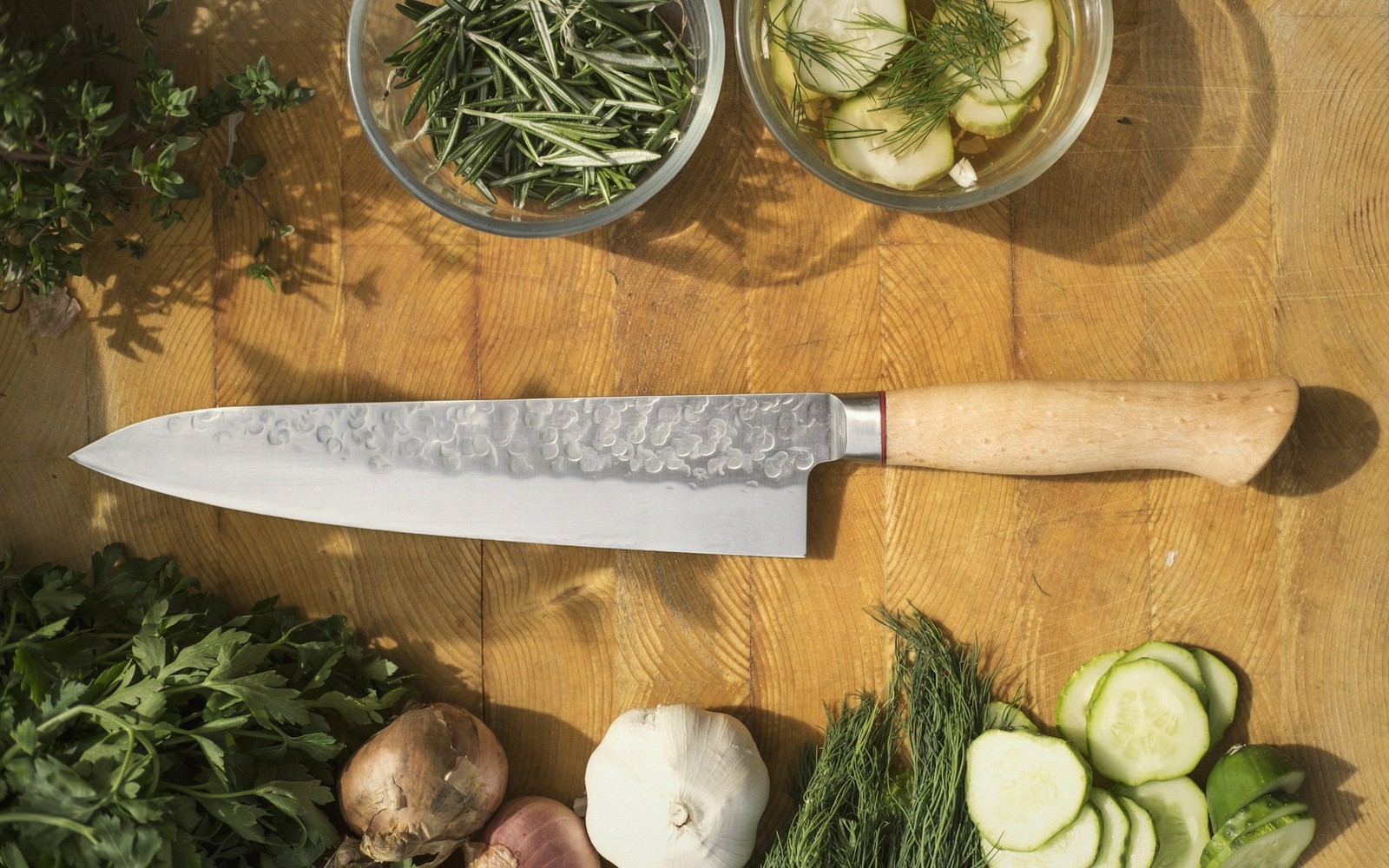
Start with a knife. One good chef's knife — somewhere between 18 and 20 cm — will handle almost everything: chopping onions, breaking down a chicken, slicing bread in a pinch. Spend what you can on it, keep it sharp, and it will outlast a dozen cheaper alternatives. A honing steel takes thirty seconds and keeps the edge aligned between proper sharpenings. That's the whole knife section.
Next, a board. Wood or thick plastic, big enough that food doesn't skid off the edge while you work. A board that's too small makes every task harder than it needs to be. Damp a cloth underneath to stop it skating across the counter — the cheapest upgrade in the kitchen, total cost nothing.
Beyond those two, the list gets short fast. A heavy-bottomed pan — cast iron or a good stainless — that can move from hob to oven. A medium saucepan. A sheet tray, the kind that doesn't warp at high heat. A wooden spoon, a rubber spatula, a set of tongs. A fine-mesh sieve. A box grater. A reliable vegetable peeler.
That's roughly it.
The things that sound essential but live in the cupboard untouched: the mandoline that's either too slow to set up or fast enough to take a fingertip. The stand mixer, unless you bake seriously and often. The unitaskers — the avocado slicer, the strawberry huller, the egg separator — that solve problems a knife already handles.
Good cooking is mostly technique and attention, not equipment. A sharp knife on a steady board will take you further than a kitchen full of gadgets.